
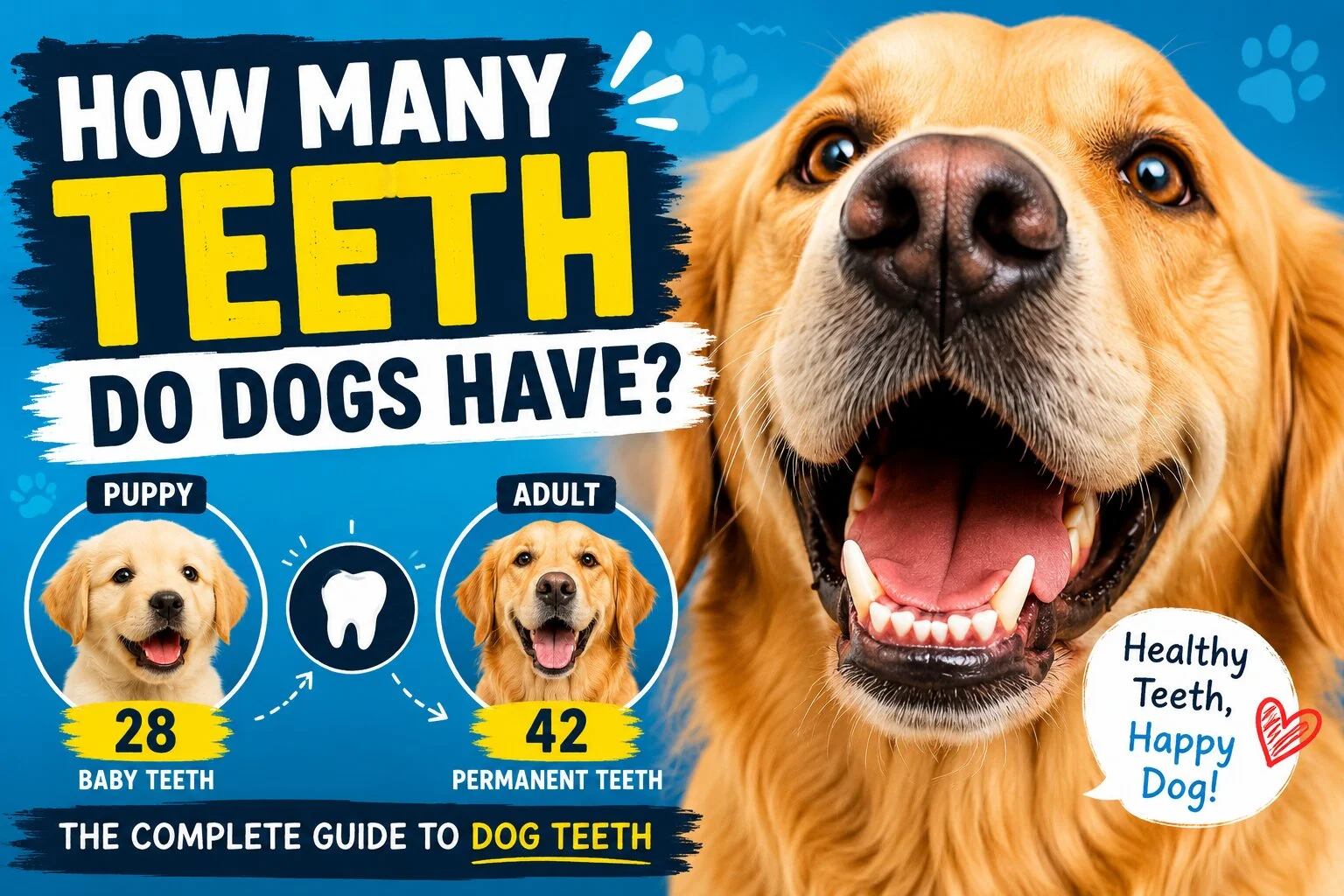
How Many Teeth Do Dogs Have? A Complete Guide for Every Dog Owner
Have you ever looked at your dog’s big smile and wondered, “How many teeth do dogs have?” You’re not alone. It’s one of the most common questions new pet owners ask, especially when their puppy starts chewing on everything in sight.
- Puppies have 28 baby teeth.
- Adult dogs have 42 permanent teeth.
But those numbers only tell part of the story. Your dog’s teeth play an important role in eating, playing, grooming, and staying healthy. Knowing what’s normal can also help you catch dental problems before they become serious.
How Many Teeth Does an Adult Dog Have?
A healthy adult dog has 42 permanent teeth. These teeth are specially designed to help dogs tear, chew, grip, and crush food.
| Dog’s Age | Number of Teeth |
|---|---|
| Puppy | 28 baby teeth |
| Adult Dog | 42 permanent teeth |
Most dogs have all 42 permanent teeth by the time they’re 6 to 7 months old.
Here’s how they’re divided:
| Tooth Type | Number |
|---|---|
| Incisors | 12 |
| Canines | 4 |
| Premolars | 16 |
| Molars | 10 |
| Total | 42 |
Each type of tooth has a different job. Together, they help your dog eat comfortably and enjoy everything from kibble to chew toys.
How Many Teeth Do Puppies Have?
Puppies don’t have visible teeth when they’re born. Their first set of teeth, often called baby teeth or milk teeth, starts coming in at around 3 to 4 weeks of age.
By the time a puppy is about 8 weeks old, they usually have 28 baby teeth.
Unlike adult dogs, puppies don’t have molars because they don’t need them while nursing or eating soft food.
| Tooth Type | Number |
|---|---|
| Incisors | 12 |
| Canines | 4 |
| Premolars | 12 |
| Molars | 0 |
| Total | 28 |
If you’ve ever been nipped by a playful puppy, you already know how incredibly sharp those tiny teeth can be!
When Do Puppies Lose Their Baby Teeth?
Puppies begin losing their baby teeth when they’re around 3 to 4 months old. During this stage, their permanent teeth slowly replace the baby teeth.
Most dogs finish teething by 6 to 7 months of age.
Puppy Teething Timeline
- 3–4 weeks: Baby teeth begin to appear.
- 6–8 weeks: All 28 baby teeth are visible.
- 3–4 months: Baby teeth start falling out.
- 4–6 months: Adult teeth continue growing.
- 6–7 months: Most dogs have all 42 permanent teeth.
It’s perfectly normal for puppies to chew more than usual during this time. Providing safe chew toys can help soothe sore gums and protect your furniture.
What Do the Different Types of Dog Teeth Do?
Every tooth has a purpose.
Incisors
Dogs have 12 incisors at the front of their mouth. These small teeth help them groom themselves, pick up small objects, and gently scrape food from bones.
Canines
The four canine teeth are the long, pointed teeth most people notice first. Dogs use them to grip toys, tear food, and carry objects.
Premolars
Adult dogs have 16 premolars that do most of the heavy chewing. They’re strong enough to crush dry kibble and tougher treats.
Molars
Located at the back of the mouth, the 10 molars help grind food before it’s swallowed.
Why Do Dogs Have More Teeth Than Humans?
Most adults have 32 permanent teeth, while dogs have 42.
The reason comes down to evolution. Dogs descended from wild ancestors that relied on powerful jaws to tear meat, crush bones, and survive in the wild.
Even though today’s dogs often eat commercial pet food, they still have the same basic dental structure.
How to Keep Your Dog’s Teeth Healthy
Dental care is one of the easiest ways to improve your dog’s overall health.
Here are a few simple habits every dog owner should follow:
- Brush your dog’s teeth several times a week using dog-safe toothpaste.
- Offer dental chews approved for dogs.
- Schedule regular veterinary dental checkups.
- Avoid giving your dog hard objects that could crack teeth.
- Watch for bad breath, bleeding gums, or loose teeth.
Good dental care doesn’t just protect your dog’s mouth—it can also reduce the risk of infections that affect the heart, kidneys, and other organs.
When Should You See a Veterinarian?
Contact your veterinarian if you notice:
- Persistent bad breath
- Bleeding gums
- Loose or broken teeth
- Swelling around the mouth
- Difficulty chewing
- Loss of appetite due to mouth pain
Early treatment can prevent small dental problems from becoming much more serious.
Frequently Asked Questions
Do all adult dogs have 42 teeth?
Most healthy adult dogs do. However, some dogs may have fewer teeth because of injury, dental disease, or previous tooth extractions.
Do puppies lose all of their baby teeth?
Yes. In most cases, all 28 baby teeth fall out and are replaced by 42 permanent teeth by about seven months of age.
Is it normal for puppies to chew everything?
Absolutely. Chewing is a normal part of teething and helps relieve discomfort as adult teeth come in.
Final Thoughts
Knowing how many teeth dogs have is more than just an interesting fact. It helps you understand your dog’s development, recognize dental problems early, and provide the care they need throughout their life.
Remember, puppies have 28 baby teeth, while healthy adult dogs have 42 permanent teeth. Regular brushing, safe chew toys, and routine veterinary checkups can go a long way toward keeping those teeth healthy.
A healthy mouth means a happier, healthier dog—and that’s something every pet owner can smile about.